
Time on site: 4 days | Area: 28m2
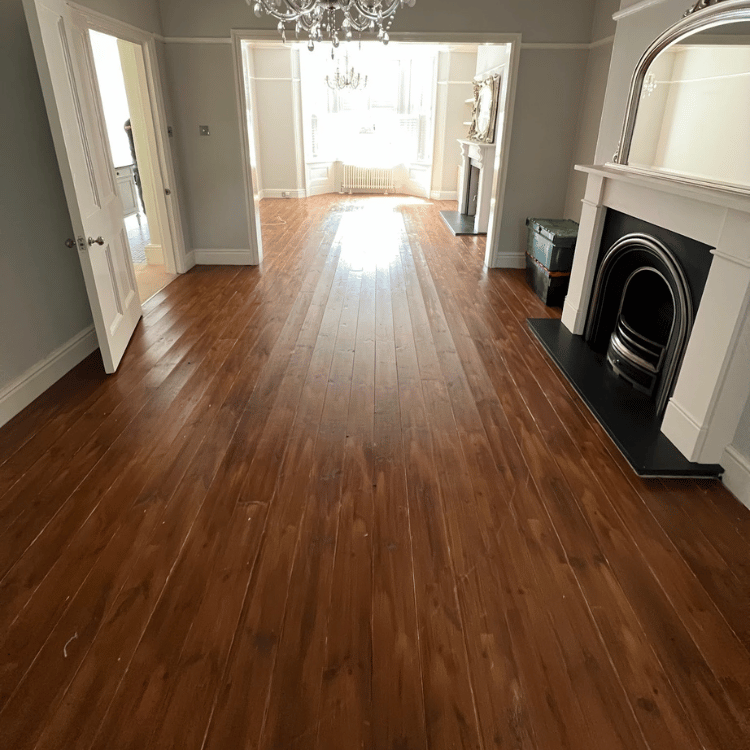
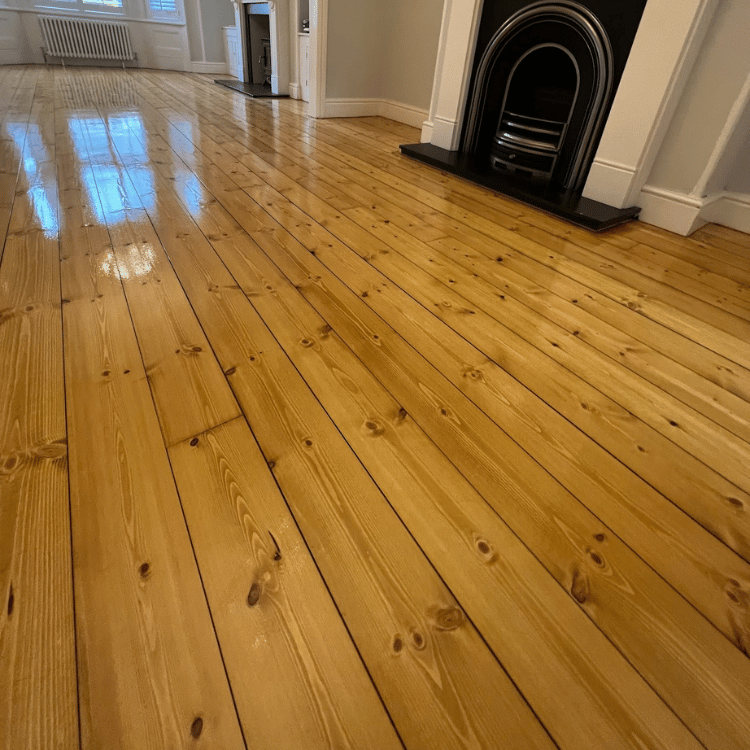
This project involved restoring a cupped pine floor in a Wellington home. The client wanted two things: a floor that was properly flat again, and a finish that felt much lighter and more natural than the dark tone it had been left in.
The starting point
The existing floor was dark, which was not the look the client wanted for the room. The boards had also cupped, meaning each board had curled slightly along its length, leaving the edges sitting proud of the centre. Cupping like this is common in older pine floors, and it needed correcting properly before we considered the new finish. A lighter colour applied over an uneven surface would only have drawn more attention to the problem, not less.
Flattening the cupboard boards
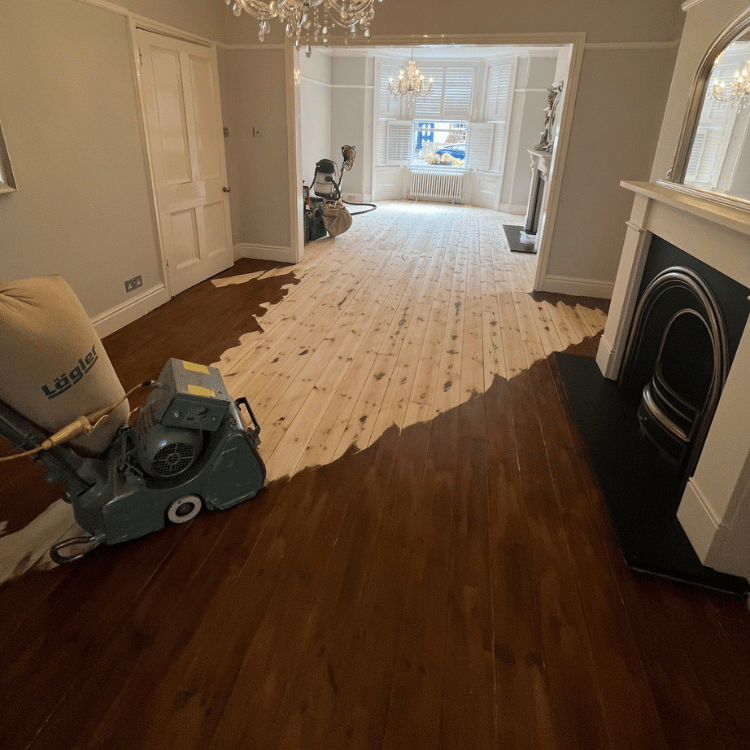
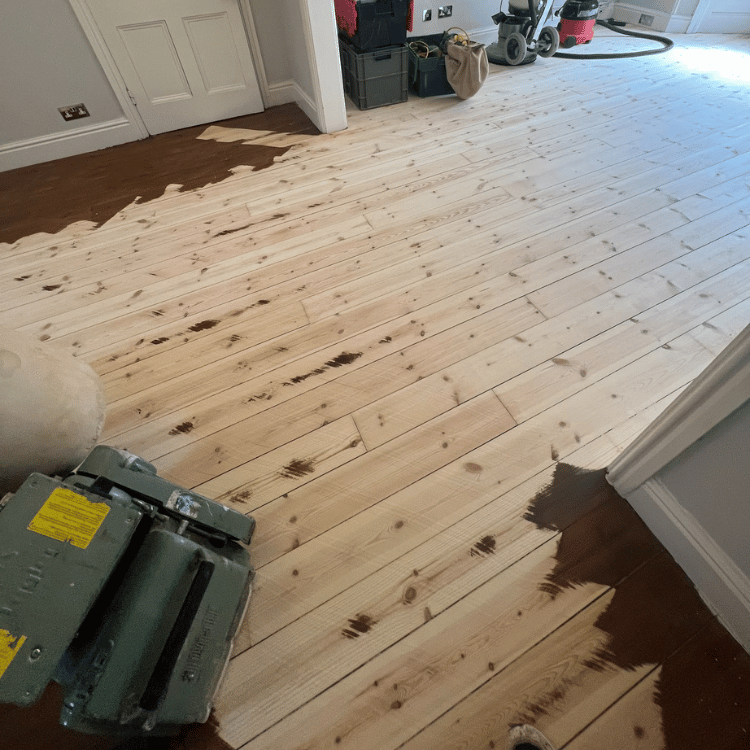
To bring the boards back level, we sanded diagonally first, working in both directions across the room. A diagonal pass is a more aggressive cut than sanding with the grain, and it was needed here to cut through the raised, cupped peaks of each board evenly rather than simply skating over them.
This stage has to be handled carefully. On a tongue-and-groove pine floor like this one, sanding a badly cupped board flat means removing more material from the raised edges than from the centre. Once finished, that can leave the edges of each board noticeably thinner than the middle. Taken too far, it can weaken or even split the edge. This was a straightforward job because the boards had enough thickness to allow for it, but it is not something we would do on a modern engineered floor with only a thin decorative veneer on top. There simply is not enough material to sand safely. Engineered floors rarely cup this badly in the first place, but that is a topic for another time.
Once the floor was properly flattened, we continued sanding through to P120, leaving a smooth, even surface ready for finishing.
Choosing the finish
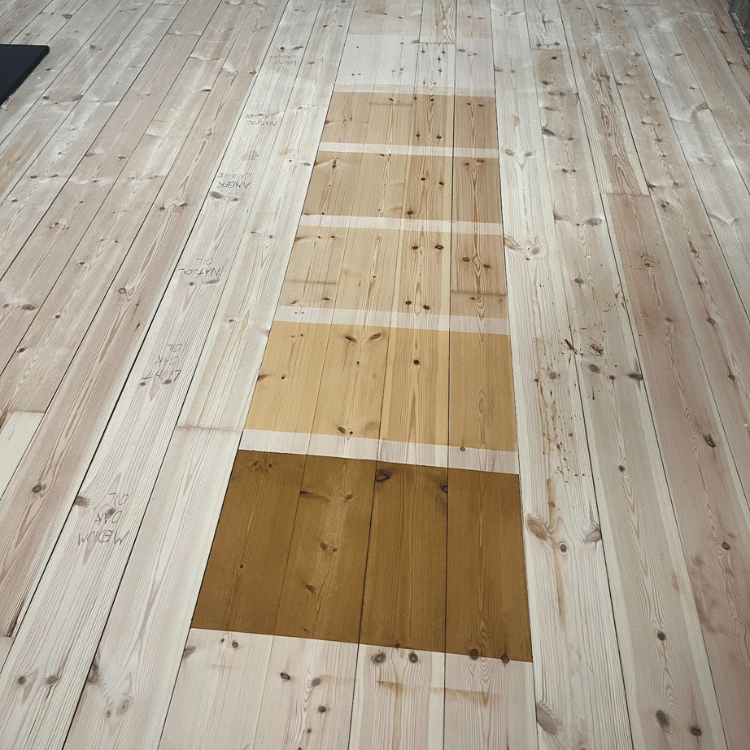
Rather than assume the right colour, we tested finish samples on the client’s own floor so they could see the real options side by side before making a decision. They chose to go lighter, a clear move away from the dark floor they had started with.
Finishing details
We primed the floor with Bona Prime Classic, which gives pine a warm, authentic Victorian tone rather than a flat, colourless finish. We then topped it with Bona Mega Matt for a durable, low-sheen protective layer.
The result
The finished floor is flat, level, and considerably lighter than it was. The new finish suits the decor of the house far better than the dark tone it replaced. The client sent us a photo once their furniture was back in place, and the room looked exactly as it should: warm, bright, and properly finished.
Thinking of restoring your cupped floorboards?
We have over 20 years experience restoring pine or floorboard flooring which has cupped or warped over time in Wellington, Somerset and the South West.
Contact us today for a free quote and we can assess whether it is safe to flatten and advise on the best way to do it. We can also help you choose a finish that suits your home.