
Time on site: 5 days | Area: 25m2
This project involved sanding and restoring the original pine floorboards in an attic room at a property near Minehead. Before we could start work on the floor itself, there was a more practical problem to solve: getting the sanding equipment up a narrow spiral staircase and into the room.
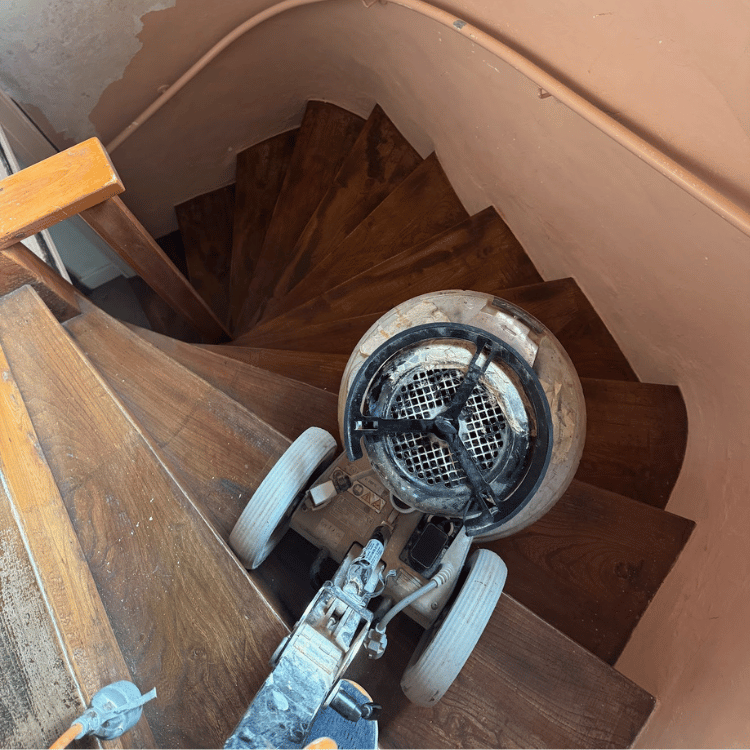
The starting point
The attic floorboards had cupped noticeably over time. Attics tend to run hotter and drier than the rest of a house, and that constant dry heat had gradually drawn moisture out of the timber. As a result, the boards had shrunk, the tongue-and-groove joints had opened slightly, and some individual boards had warped. It is a common issue in older attic conversions: the space that makes a useful extra room can also be one of the harshest environments for the floor beneath it.
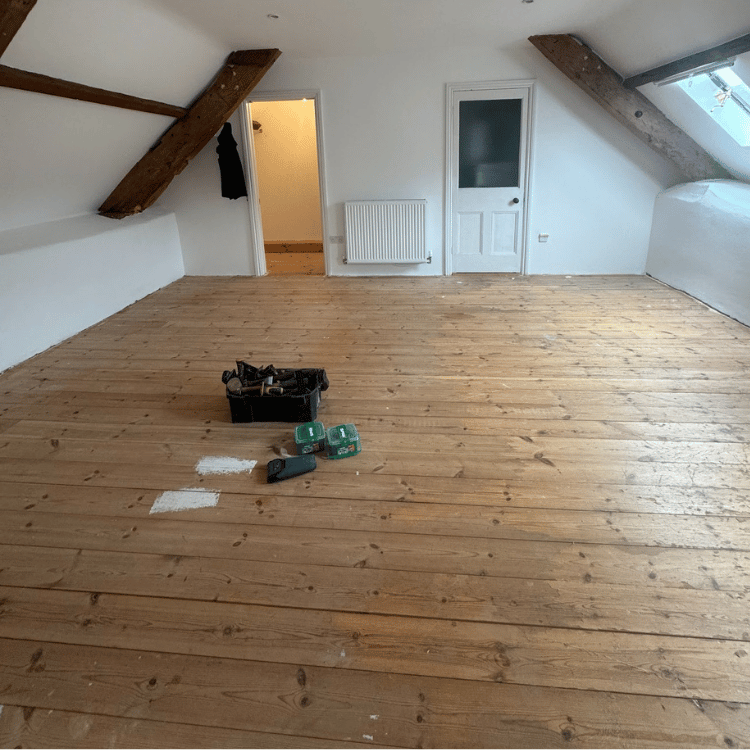
Investigating and securing the boards
Before any sanding began, we removed one board in every five rows to access the space underneath and locate joists, cables and pipework. Once everything had been mapped out, each floorboard was marked and screwed down directly into the joists. This pulled the cupped and warped boards back down flat and secure, rather than simply sanding over the problem. The screw holes were then filled.
A couple of boards needed their tongues cut away so they could be lifted for access, which left visible gaps once they were refitted. Rather than leave an inconsistent finish where those cuts had been made, the client chose to have the resulting gaps filled to match, helping the finished floor look uniform.
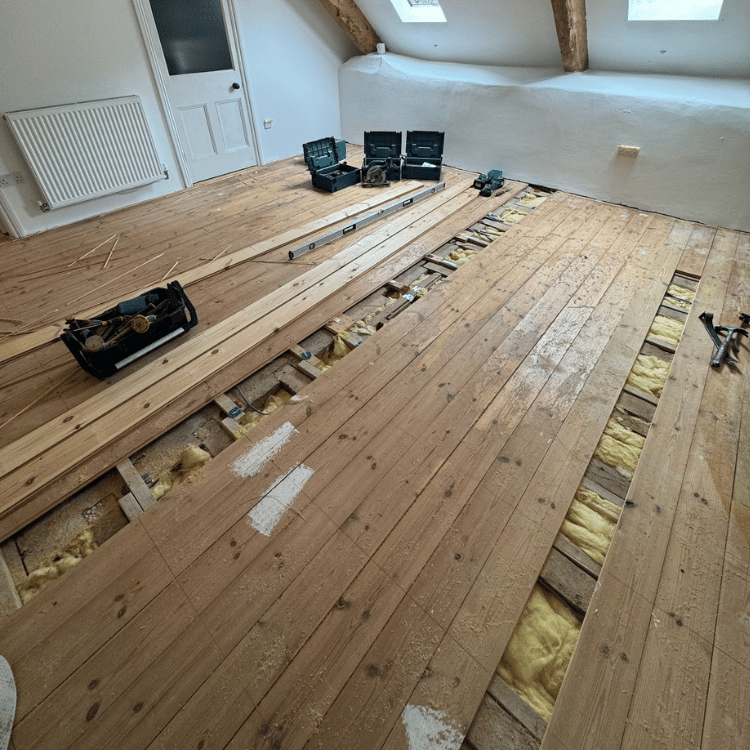
Sanding and sealing the joints
The floor was sanded through a full grit sequence of 40, 60, 80, 100 and 120 to bring it back to clean, even timber. Because the boards are tongue and groove, we filled the joints with mastic before finishing. This helps stop dust collecting in the gaps over time. Once the mastic had cured, it was sanded back level so it would not show in the finished floor.
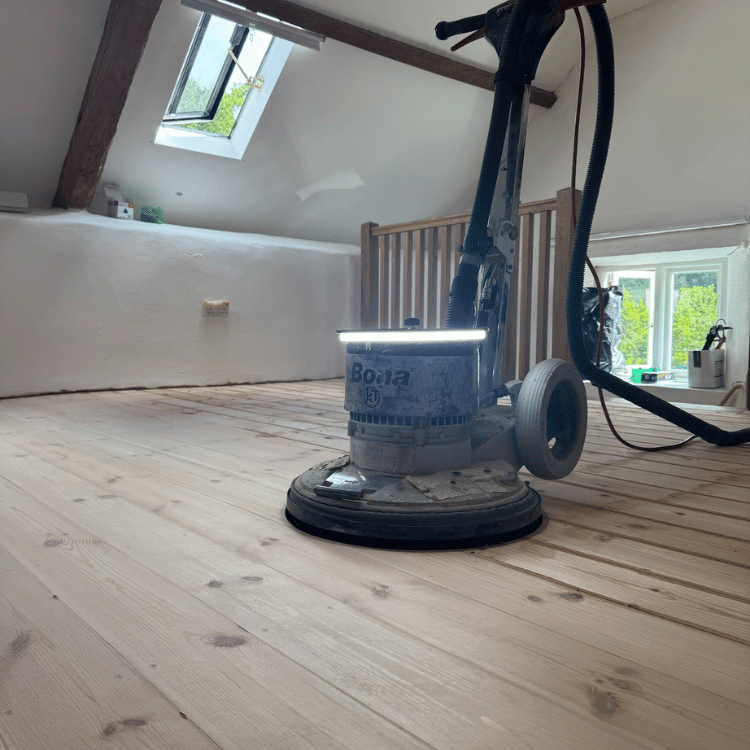
Finishing details
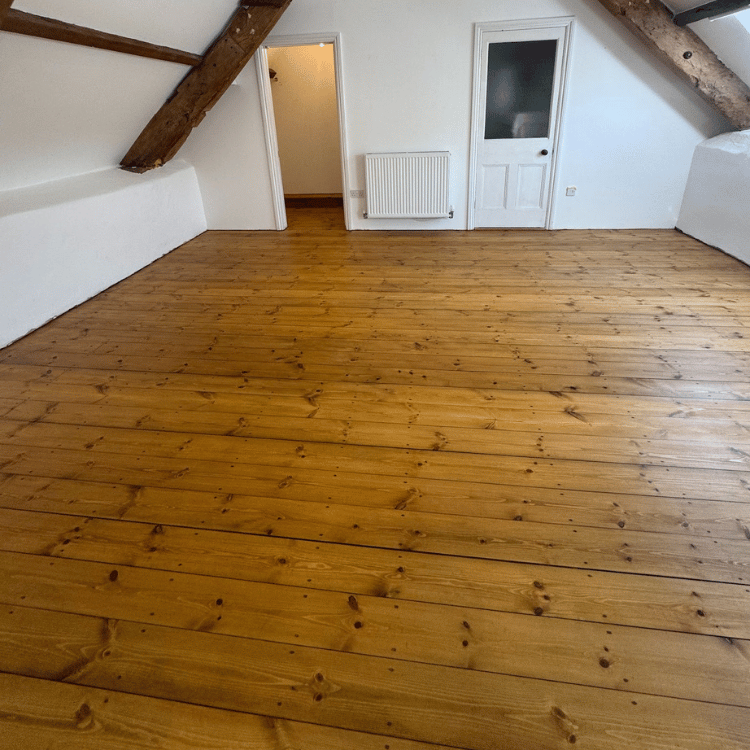
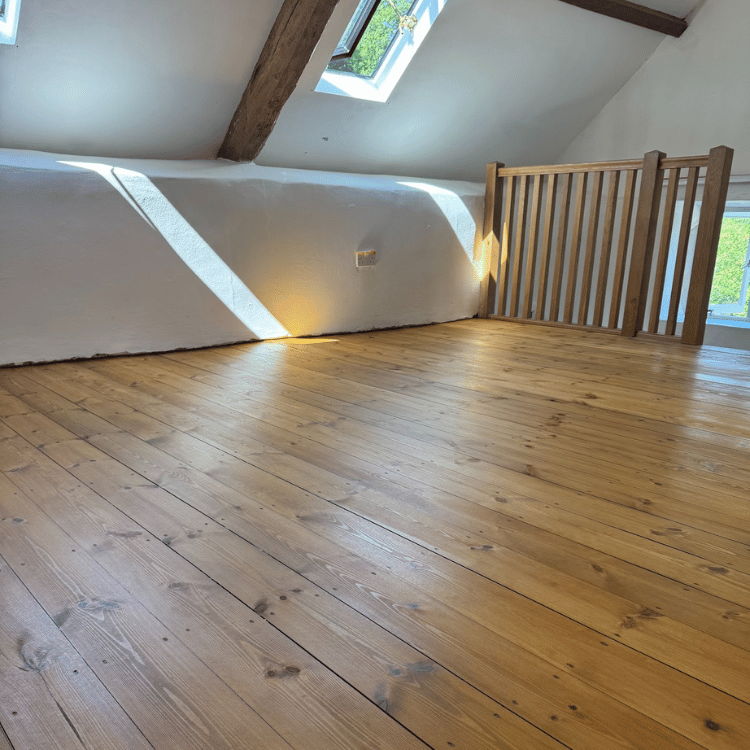
Once sanding was complete, we tested finish samples with the client before committing to the final look. They chose a light oak stain, so we applied Morrells Classique in Light Oak, followed by Bona Mega Matt for a durable, low-sheen protective finish suited to a room that gets regular use.
The result
The attic floor is now flat, secure and properly finished, with the cupping and warping caused by years of heat and dryness corrected properly rather than just disguised. The client was delighted with the result, and so were we. Getting the equipment up that spiral staircase made it a job we were especially proud of.
Do you think your oak floorboards need sanding?
We have over 20 years experience sanding and restoring oak floorboards in Minehead, Somerset, and the South West.
Contact us today for a free quote.
Unsure whether floor sanding is right for your floorboards? Read our guide Is floor sanding worth it or should you replace your floor?